
Setbacks and Shipwrecks: Sailing through Career Storms

Updated: Sep 6
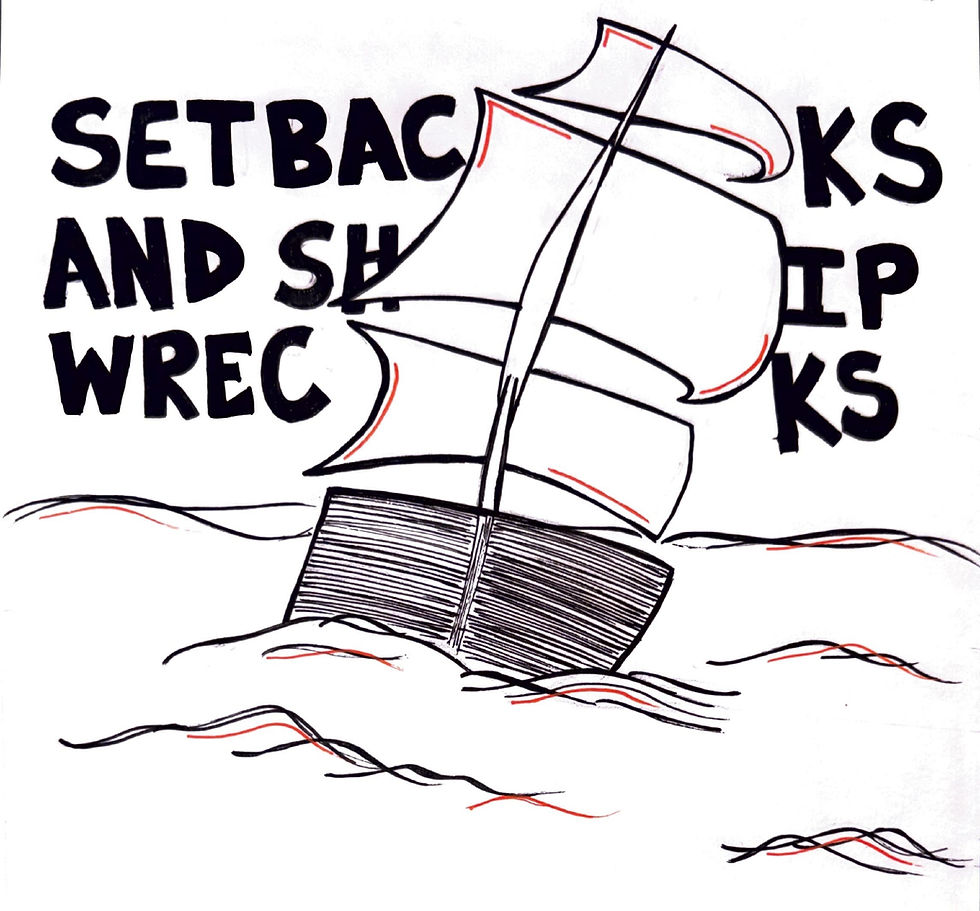
Or something like that. You may have had some version of this sentence echo in your mind at least once in your career. Maybe that promotion that you were anticipating did not work out. Maybe a team member walked out in the middle of the project, leaving you stranded. Maybe you are trying to take another step in your career ladder, but just don’t know how to.
You have witnessed yourself build the perfect ship. You know all the blood, sweat and tears that have gone into it. Yet, there is this constant sense of being capsized.
But here’s the secret: Having the “perfect ship” is an illusion. Even the best captains encounter their share of storms. What makes them the best is not the build of the ship, but how they adjust their sails.
Let us unravel this further.
A career setback is not an isolated event. It sets off a chain reaction leading the person to experience a series of emotions. Let us try to understand this through a simple framework proposed by Kubler Ross which beautifully explains the stages of grief.
Yes, grief is not an emotion that is usually associated with work. But just think about it. Doesn’t a failed idea feel like the death of an opportunity? Or a flopped presentation feel like the death of a chance at a promotion? Doesn’t a capsized ship imply the death of a voyage?
This storm of emotions can unknowingly drag you into the 5 stages of grief:
Denial
This is the stage of fog of disbelief. You refuse to believe that something bad has even happened. This is your body’s way of protecting you from this whirlpool of emotions and preventing you from drowning by muting the “thinking and feeling” parts of your brain. The waters may seem calm but that is only because you have locked yourself away from them.
Anger
This is the stage of the raging tide. C.S. Lewis once said, “I sat with my anger long enough until it told me her real name was grief”. While this quote lends itself to British Literature, there is no denying that anger does appear to be grief’s closest sibling. Whether this anger is instrumental or not depends on how it is channelised. You could either use it to get out of the turbulent waters or misuse it by lashing out on your crew.
Bargaining
This stage tries to change the wind’s direction and may be the most vulnerable one among the lot. If you have ever found yourself striking imaginary deals with the past in the form of “If only that had happened this way, instead of happening this way”, then you have been familiarised with this stage.
My dear Captain, sail out of this stage as soon as possible. Bargaining gives you the illusion that you can change events that have already happened. It makes you revisit a miserable event. That in turn, fires up the emotion centre in your brain- the amygdala, making the past event an active threat. Finally, you are left feeling sorry about the past while also being drained of any motivation that you may have earlier possessed to act on your present.
Depression
This stage is about just trying to remain afloat. You worked hard and it did not pay off. Maybe you were even betrayed. You have the right to feel sad about it. This is where you allow the amygdala to have its moment. Cry it out. Scream into the air.
Acknowledge how you feel. Also notice if your emotion is contained or has been spilled over. What that means is, reflect on whether your thoughts are more like “I am disappointed over this event” or more like “ I do not think I deserve anything better”. The latter is a more global, hence, a more dangerous thought. Remember, you have encountered one iceberg. The rest of the ocean remains mysterious.
Acceptance
In this stage, you finally welcome the new wind. Acceptance is not synonymous with moving on. Its core lies in reclaiming power and changing mindset. It is more than simply acknowledging what happened. It is about reminding yourself that it happened, it is in the past, and there is not much that can be done to change it. Maybe even questioning what can be learnt from it. Maybe this storm has left clues about the next tide. Once you have accepted this demise, you are now a free captain with a new map that could use your attention.
When you are out in the free-spirited waters, you will come across a lot. Not everything will be pleasant. Some things may linger on as painful memories. While the “smart” strategy might be to re-route and move on, the wisdom lies in absorbing the journey- the surprises, the mysteries and the harsh truths alike!

Comments